


Should I Choose Neutral Wallpaper If I Want To Sell My Home?
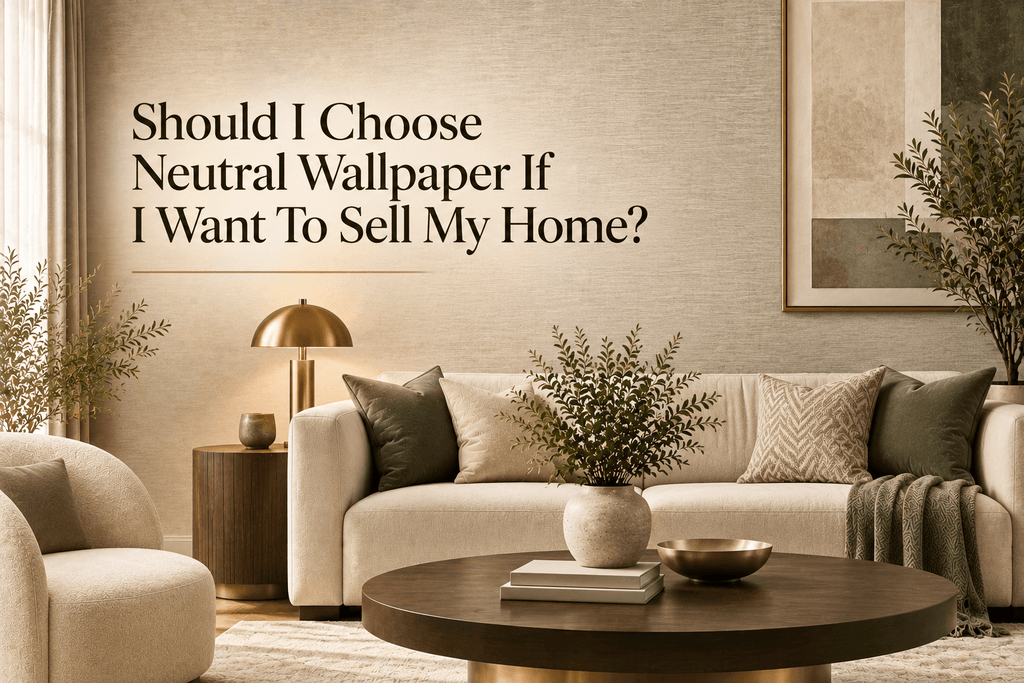
When preparing a home for sale, every design decision starts to feel like a calculation.
Will buyers like this color?
Will this pattern make the room feel smaller?
Should the walls be completely plain?
Could wallpaper actually help the home feel more memorable?
If you're considering wallpaper before putting your home on the market, the safest answer isn't necessarily "remove all personality."
Instead, think about versatility.
A well-chosen neutral wallpaper can make a home feel finished, sophisticated, and easier for potential buyers to imagine as their own. But the wrong wallpaper—even if it's technically neutral—can have the opposite effect.
At AdaWall, we believe successful wall design is about creating an environment that feels intentional without becoming overly specific to one person's taste.
Is Neutral Wallpaper Better for Selling a Home?
Generally, neutral wallpaper can be a smart choice when resale is the priority.
The reason is simple: buyers need to be able to visualize their own furniture, artwork, and lifestyle in the space.
A highly personal or dramatic wallcovering can become the first thing they notice.
A sophisticated neutral can instead act as a backdrop.
That doesn't mean every wall needs to be white or beige.
A neutral wallcovering can still introduce:
-
Texture
-
Dimension
-
Pattern
-
Warmth
-
Architectural interest
-
A sense of quality
The goal is to make the room feel finished without making it feel predetermined.
Why Neutral Walls Appeal to Buyers
When people walk into a home for the first time, they make quick visual judgments.
A neutral environment can reduce the amount of mental work required to imagine the space differently.
Instead of thinking:
"Would I live with this wallpaper?"
they can focus on:
"Where would my furniture go?"
That distinction matters.
Neutral doesn't necessarily increase a home's value by itself, but it can make the presentation of the property feel more broadly appealing.
1. Neutral Wallpaper Doesn't Have to Mean Plain
This is one of the biggest misconceptions.
A neutral wall can still have considerable visual depth.
Consider:
-
Linen-inspired texture
-
Subtle embossing
-
Tone-on-tone patterns
-
Plaster-inspired surfaces
-
Fine geometric details
-
Soft organic textures
These designs add sophistication without demanding a particular decorating style.
2. Texture Is Often Better Than a Strong Pattern
If resale flexibility is your priority, texture can be a particularly useful alternative to bold pattern.
A textured neutral wallcovering can create interest through light and shadow rather than a highly recognizable motif.
For example, a warm beige wallpaper with a subtle woven texture can work with:
-
Contemporary furniture
-
Traditional furniture
-
Transitional interiors
-
Minimalist décor
-
Natural materials
That flexibility is valuable when you don't know what kind of buyer will eventually own the home.
3. Warm Neutrals Can Make a Home Feel More Inviting
Not every neutral creates the same atmosphere.
Very cool grays can sometimes make a room feel sterile, particularly when combined with cool artificial lighting.
Warm neutrals can create a softer impression.
Consider:
-
Cream
-
Ivory
-
Warm beige
-
Taupe
-
Mushroom
-
Soft sand
-
Warm stone
These colors can make rooms feel comfortable while remaining relatively easy to style.
4. Greige Can Be a Useful Middle Ground
If you're unsure between beige and gray, greige can offer flexibility.
It combines characteristics of both:
Gray → cooler and contemporary
Beige → warmer and traditional
Greige → adaptable middle ground
The exact undertone matters, however.
Always look at samples in the actual room because natural and artificial lighting can dramatically change how a neutral appears.
5. Consider the Whole House, Not Just One Room
If you're wallpapering before selling, think about how the walls relate to one another.
You don't necessarily need identical wallpaper throughout the house.
But there should be a visual relationship.
For example:
Living room → warm textured beige
Bedroom → softer ivory texture
Hallway → slightly deeper taupe
The colors can vary while maintaining a coherent overall palette.
This can make the home feel more thoughtfully designed.
6. Keep High-Impact Wallpaper in the Right Places
Not every room needs to be completely neutral.
A dramatic wallpaper can still work beautifully in a home that's being prepared for sale.
The key is placement.
A powder room, small entryway, or accent wall can tolerate more personality than a large living room.
This gives you an opportunity to create memorable moments without making the entire home highly specific.
7. Avoid Making Every Room Look Identical
Resale preparation doesn't mean turning the home into a showroom with the same beige wall everywhere.
Too much uniformity can remove character.
Instead, use a consistent design language.
For example:
Warm neutrals + natural textures + subtle variation
This creates continuity without repetition.
8. Think About Furniture Compatibility
A potential buyer may have completely different furniture from yours.
Your wallpaper should ideally work with multiple possibilities.
Ask yourself:
Would it work with a dark sofa?
Would it work with light furniture?
Would wood look good against it?
Could someone use colorful artwork?
Would both modern and traditional furniture make sense?
The more "yes" answers you get, the more flexible the wallcovering is likely to be.
9. Don't Forget the Architecture
Neutral wallpaper can actually highlight architectural features.
For example, a subtle textured wallcovering can complement:
-
Crown molding
-
Wainscoting
-
Built-ins
-
Arched openings
-
Tall ceilings
-
Fireplace surrounds
-
Architectural paneling
In these situations, wallpaper doesn't need to compete with the architecture.
It supports it.
10. Small Rooms Can Benefit From Neutral Wallpaper
Neutral wallpaper can be particularly effective in compact spaces.
A subtle texture can give the walls more dimension without making the room visually chaotic.
This works especially well in:
-
Hallways
-
Small bedrooms
-
Home offices
-
Powder rooms
-
Entryways
But don't assume small spaces must always be light.
A darker neutral with subtle texture can sometimes create a sophisticated, enveloping atmosphere.
11. Bedrooms Benefit From Calm Wallcoverings
Bedrooms are highly personal spaces.
When preparing a bedroom for sale, a calming wallcovering can help create the feeling of a retreat.
Consider:
-
Soft beige
-
Warm ivory
-
Dusty taupe
-
Muted sage
-
Soft gray
-
Linen-inspired textures
Avoid overly busy patterns if the goal is broad appeal.
The room should feel restful rather than visually demanding.
12. Living Rooms Need Balance
Living rooms are usually among the most important spaces for prospective buyers.
They need enough personality to feel designed but enough neutrality to remain flexible.
A textured neutral wallpaper can provide that middle ground.
Instead of competing with the sofa, rug, artwork, and lighting, the wall becomes part of the overall composition.
13. Dining Rooms Can Handle More Personality
Dining rooms are often more forgiving.
If you want to introduce a stronger design element, this can be a good place to do it.
For example:
-
A subtle geometric
-
A richer neutral
-
A sophisticated botanical
-
A dimensional embossed design
The key is maintaining visual sophistication.
14. Bathrooms Require Careful Selection
Bathrooms can benefit from wallpaper, but the wallcovering should be appropriate for the environment and professionally installed.
For resale, a restrained design can make the space feel polished without overwhelming the fixtures.
A subtle texture or elegant tonal pattern can work particularly well.
15. Entryways Create the First Impression
The entryway is one area where a little more personality can be useful.
A buyer may remember a beautiful entry because it establishes the atmosphere of the house immediately.
You can use:
Texture
A refined pattern
A deeper neutral
A subtle architectural motif
The goal is not to overwhelm the visitor.
It's to create a strong first impression.
16. What Neutral Wallpaper Should You Avoid?
Not every neutral is automatically resale-friendly.
Be cautious with:
Extremely yellow beige
It can make interiors feel dated depending on the surrounding finishes.
Very cool gray
It can feel stark in rooms with limited natural light.
High-contrast geometric designs
These can become visually dominant.
Strong metallic finishes
They may appeal strongly to some buyers but not others.
Highly specific decorative motifs
The more personal the design, the narrower the potential audience.
17. Should You Remove Existing Wallpaper Before Selling?
Not necessarily.
If your existing wallpaper is:
-
Well maintained
-
Professionally installed
-
Visually current
-
Appropriate for the room
-
Relatively neutral
there may be little reason to remove it simply because you're selling.
On the other hand, wallpaper that is damaged, peeling, heavily dated, or highly personalized may benefit from replacement.
The question isn't:
"Is wallpaper good or bad for resale?"
It's:
"Does this particular wallpaper help the home look its best?"
18. Quality Matters More When Selling
Buyers may not know the technical details of wallpaper, but they can often recognize when something looks cheap or poorly installed.
Visible seams, lifting edges, damaged surfaces, or inconsistent installation can undermine the impression of the entire room.
If you're investing in wallpaper before selling, professional installation and a high-quality finish are worth considering.
A sophisticated design cannot compensate for poor execution.
19. Neutral Wallpaper Can Add Perceived Depth
Paint creates a flat surface.
Wallpaper can create layers.
Even a restrained design can introduce:
-
Surface variation
-
Light reflection
-
Shadow
-
Pattern
-
Texture
These details can make a room feel more complete.
This is particularly useful in newer homes where architecture may be relatively simple.
20. Don't Wallpaper Every Wall Just Because You're Selling
More isn't necessarily better.
If the house already has strong architectural features, flooring, cabinetry, or artwork, wallpaper may need to play a supporting role.
Sometimes one carefully selected wallcovering is enough.
Other times, wrapping an entire room creates the most cohesive result.
The right amount depends on the space.
Neutral Wallpaper Styles for Resale
| Wallpaper Style | Buyer Flexibility | Visual Interest | Resale-Friendly |
|---|---|---|---|
| Warm textured neutral | ★★★★★ | ★★★★☆ | ★★★★★ |
| Linen-inspired texture | ★★★★★ | ★★★☆☆ | ★★★★★ |
| Soft tone-on-tone | ★★★★★ | ★★★★☆ | ★★★★★ |
| Light plaster texture | ★★★★★ | ★★★★☆ | ★★★★★ |
| Subtle geometric | ★★★★☆ | ★★★★☆ | ★★★★☆ |
| Muted botanical | ★★★★☆ | ★★★★☆ | ★★★★☆ |
| Bold floral | ★★★☆☆ | ★★★★★ | ★★★☆☆ |
| High-contrast pattern | ★★☆☆☆ | ★★★★★ | ★★☆☆☆ |
A Simple Resale-Friendly Wallpaper Formula
If you want a straightforward starting point, consider:
Warm neutral
Subtle texture
Low-to-medium contrast
Quality finish
Professional installation
This combination gives the room character while keeping it flexible.
What If You Love Bold Wallpaper?
Don't automatically eliminate it just because you're selling.
If the wallpaper is beautiful and works with the architecture, it may actually become a memorable feature.
The trick is choosing where to use it.
A dramatic powder room or sophisticated dining room can show personality without making the entire property difficult to imagine differently.
Resale design should be broadly appealing, not completely anonymous.
The Psychology of a "Move-In Ready" Home
One reason well-designed wallpaper can work during a sale is that it contributes to the feeling that a home is finished.
Buyers don't necessarily want to see endless projects.
A room with thoughtfully selected wallcovering, coordinated lighting, furniture, and accessories can communicate care and intention.
The psychological response isn't necessarily:
"I love this exact wallpaper."
It may simply be:
"This room feels good."
That reaction can be more valuable.
How AdaWall Approaches Wallpaper for Long-Term Design
At AdaWall, we believe a successful wallcovering should do more than follow a trend.
The strongest designs can provide a foundation for the room.
A textured neutral can feel elegant with contemporary furniture today and work with a completely different interior style tomorrow.
A subtle embossed finish can create dimension without forcing a particular decorating direction.
A restrained pattern can introduce personality while remaining versatile.
That flexibility matters whether you're staying in your home for years or preparing it for its next owner.
Frequently Asked Questions
Is neutral wallpaper a good idea when selling a house?
It can be. Neutral wallpaper is generally easier for prospective buyers to visualize with their own furniture and décor, particularly when the design is subtle and sophisticated.
What wallpaper color is best for resale?
Warm neutrals such as ivory, cream, beige, taupe, and soft stone can provide broad flexibility. The best choice ultimately depends on the home's lighting, flooring, cabinetry, and architecture.
Is textured wallpaper good for resale?
A refined texture can be a strong option because it adds depth without imposing a highly specific decorative style.
Should I remove bold wallpaper before selling?
Not always. If it is high quality, well maintained, and works beautifully with the room, it may be worth keeping. If it is damaged or highly personalized, replacement may make sense.
Does wallpaper increase home value?
Wallpaper itself doesn't guarantee a higher selling price. Its potential benefit is more indirect: a well-designed and well-maintained interior can contribute to a stronger overall presentation.
Should every room have neutral wallpaper?
No. A home can have personality. The goal is to create a cohesive environment rather than make every room identical.
Final Thoughts
So, should you choose neutral wallpaper if you want to sell your home?
In many cases, yes—but think beyond the word neutral.
The most effective resale-friendly wallpaper isn't necessarily plain beige.
It's a wallcovering that feels refined, adaptable, well executed, and connected to the architecture of the home.
Texture can provide depth.
Warm neutrals can provide flexibility.
Subtle patterns can provide personality.
And quality installation can make the entire space feel more polished.
Ultimately, you're not trying to design a home that nobody dislikes.
You're creating a home where more people can imagine themselves living.
And that's where timeless wallpaper can make a meaningful difference.